Customer story /Apr 24, 2026 /9 min read
How Deep Rock Galactic Turns 600k Discord Members into a QA Superpower
Ghost Ship Games reduced duplicate reports by 50-70% and automated issue resolution for their 600k+ Discord community using BetaHub's knowledge base, duplicate detection, and multi-game bug routing.

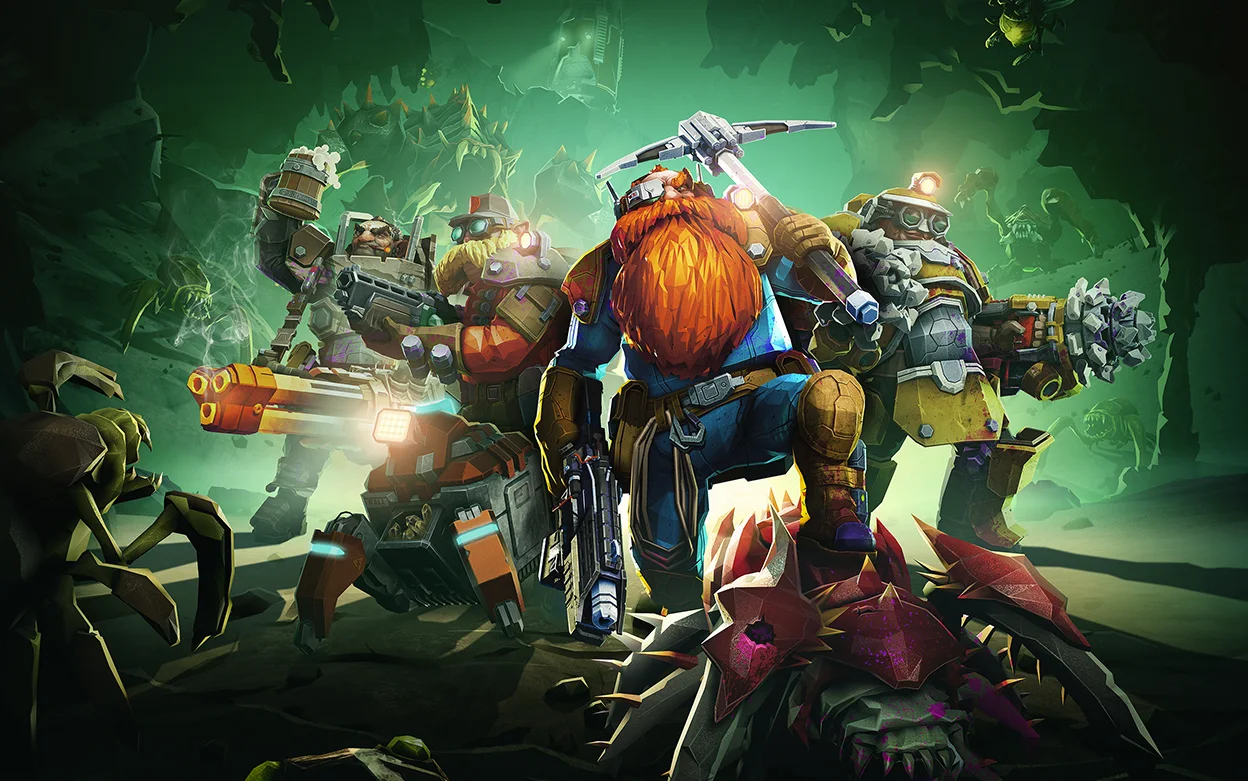
When your Discord has 600,000 members and a new update drops, bug reports don’t trickle in — they flood. Ghost Ship Games needed a system that could scale without scaling the team.
Ghost Ship Games, the studio behind the beloved cooperative FPS Deep Rock Galactic, has built one of the most engaged communities in gaming. But with over 600,000 Discord members and multiple games in active development, staying connected to player feedback without drowning in it became a defining challenge for their lean QA team.
The insights and quotes in this case study come from Bjørn Meldal, Senior QA & Release Manager at Ghost Ship Games, who has been with the studio for seven years.
The Challenge
The question for Ghost Ship wasn’t whether they needed bug tracking — they’d evolved through several tools already, from Jira to PleaseFix. The question was how to make those tools work smarter as their community continued to grow.
“We really wanted a better way of connecting our bug reporting with Discord, as we have a large number of our players there, and with the advances in AI, we wanted to see if there was solutions that could integrate Discord more, and reduce some of the work in manually pruning bug databases.”
— Bjørn Meldal, Senior QA & Release Manager, Ghost Ship Games
The scale becomes clear during release periods. In quiet weeks, the team handles 10–50 bugs through reporting tools plus 100–600 Discord posts. When a new update drops, that volume can easily double. And it all flows through a team of just three QA members with direct access to bug management systems.
The old workflow consumed between 1–60 hours per week sorting through Discord, a couple of hours removing duplicates, and another 2–4 hours figuring out what was actually important. For a small team managing multiple Ghost Ship titles, the manual work was becoming unsustainable.
The Discovery
Unlike many tool adoptions that happen during crisis moments, Ghost Ship’s path to BetaHub started organically. One of their testers had heard about the platform and suggested giving it a try. The team’s response: set up a test database and evaluate it properly.
“It was very easy, we set it up, tried a bunch of use cases and we started talking to the head dev Piotr, and he was quickly digging any issues we had so it all went very fast, and it was clear that our ideas and suggestions for improvements was listened to and implemented.”
— Bjørn Meldal, Senior QA & Release Manager, Ghost Ship Games
The features aligned with exactly what Ghost Ship was looking for: Discord bot integration with listen mode, AI-powered duplicate detection, and the /report command for structured submissions. After testing confirmed the platform could handle their workflows, management approved the switch quickly.
Community reaction was telling in its subtlety. “Most times when you switch a bug tracking database, it isn’t in the forefront of the players’ minds, so you need to look at the more subtle reactions. Things like the increased amount of bug reports, less questions about how to report issues, how to make accounts, etc. All of which gave positive signs.”
In the world of community tools, “no complaints” is high praise.
The Implementation
Today, Ghost Ship’s bug reporting workflow operates through multiple automation layers, each filtering and processing submissions before they reach human review.
When a player posts a potential bug in Discord, they’re directed to use the /report command for structured submission. From there, the report flows through several automated checks:
- Knowledge Base screens for known issues and provides instant solutions
- Canned Responses handle common problems automatically
- AI Duplicate Detection identifies and merges similar reports
- Valid New Bugs enter BetaHub for QA review
- Critical Issues get forwarded to Notion where they become developer tasks
“At that point the bug is in BetaHub, if it passed our knowledge base that informs about currently known issues, our canned responses, if the bug was made incorrectly, and AI duplicate projection. Whenever we need to forward the issue to development, we import the issue to Notion where it becomes part of the developers’ tasks.”
— Bjørn Meldal, Senior QA & Release Manager, Ghost Ship Games
The three BetaHub features Ghost Ship relies on most heavily are Discord bot listen mode (monitoring conversations), the /report command, and AI duplicate detection. But Bjørn highlights one feature as particularly valuable: “The knowledge and canned responses are saving me a lot of manual work, which is very nice.”
Multi-Game Management
One capability that sets Ghost Ship’s implementation apart is how they’ve extended BetaHub across their portfolio. Deep Rock Galactic isn’t the only game they’re managing.
“We also have other similar games with their own bug databases, and we are able to redirect those bugs automatically now, instead of spending time cleaning up those issues,” Bjørn notes.
Bug reports submitted for other Ghost Ship titles automatically route to the correct game’s database — no manual sorting, no cleanup time, no reports falling through the cracks. For a studio managing multiple live games with a lean QA team, this automation multiplies their efficiency across their entire portfolio.
The Results
Key Metrics
With three QA members serving a 600,000+ Discord community, every hour saved compounds. The 50–70% duplicate reduction means the team spends its time on real bugs instead of merging redundant reports.
But the more interesting story isn’t just about catching duplicates. It’s about preventing issues from becoming bug reports in the first place.
“The knowledge base is something that gives a lot of value, since our game has been live for many years, we are able to supply known solutions for players when they create bugs, so they can try and solve their issues instead of just creating a bug and waiting for help. For our newer games, I fully expect that we will spend more time expanding on this.”
— Bjørn Meldal, Senior QA & Release Manager, Ghost Ship Games
This represents a philosophical shift from reactive bug management to proactive issue prevention. Players encountering known issues get instant solutions through the knowledge base rather than creating reports and waiting for responses. For a game that’s been live for years, this accumulated knowledge becomes increasingly valuable over time.
The impact extends beyond pure time savings. “I feel they are more actionable, since the flow of asking the reporter for more info is better now,” Bjørn notes about report quality. The structured /report command and automated follow-up system make it easier to gather the information needed to actually fix issues, rather than spending cycles chasing down basic details.
Looking Forward
Even with strong results, Ghost Ship continues pushing for better. When asked what they’d like to see improved, Bjørn’s response was immediate: “Further improvements to the AI so it can be better at detecting duplicates. In addition to this, BH will become an important building block for us to continue our work with AI QA processes and support, freeing up our time for creative testing and interacting with our community in new ways.”
This mindset — not satisfied with 50–70% reduction when more is possible — reflects the same continuous improvement philosophy that led them from Jira to PleaseFix to BetaHub in the first place.
As Deep Rock Galactic continues to evolve and Ghost Ship Games expands its portfolio, BetaHub’s multi-game management capabilities position them to scale efficiently across future titles without adding QA headcount proportionally. For a studio that’s proven three people can effectively manage 600,000+ players with the right tools, that’s not just efficiency — it’s a sustainable competitive advantage.
Key Takeaways
The Challenge:
- 600,000+ Discord community members generating massive feedback volume
- Volume doubles during releases — handled by just 3 QA members
- 1–60 hours per week sorting through Discord feedback manually
- Multiple games in active development with a lean QA team of 3
The Solution:
- Deployed BetaHub’s Discord bot with listen mode and /report command
- AI duplicate detection to automatically merge similar reports
- Knowledge base providing instant solutions for known issues
- Multi-game bug routing across Ghost Ship’s portfolio
- Canned responses for common problems
The Results:
- 50–70% reduction in duplicate bug reports
- Release volume spikes handled by 3 QA members without adding headcount
- Proactive issue prevention via knowledge base
- Automated multi-game bug routing eliminated manual sorting
- More actionable reports through structured submission flow
Best Quote: “The knowledge and canned responses are saving me a lot of manual work, which is very nice.” — Bjørn Meldal, Senior QA & Release Manager, Ghost Ship Games
Ready to Scale Your QA Without Scaling Your Team?
Ghost Ship Games turned a 600,000-player Discord community from an overwhelming feedback firehose into a structured, automated QA pipeline — with just three people.
If you’re dealing with:
- Massive community feedback that overwhelms your small QA team
- Duplicate reports consuming hours of manual review every week
- Release spikes that make bug triage unsustainable
- Multiple games where reports end up in the wrong database
- Known issues that keep generating new reports instead of self-resolving
…then it’s time to consider BetaHub. Join our Discord server, where you can see the platform in action and get help directly from our team, just like Ghost Ship Games did.
Our mission: Turn every bug report into an actionable fix — no matter how large your community grows.
See you on Discord and happy developing!
With Love, The BetaHub Team
Join for free today
Supercharge your team with the best bug tracking and player feedback tools. No credit card required, forever free.

Our Mission
At BetaHub, we empower game developers and communities with an engaging platform for bug submission. We foster collaboration, enhance gaming experiences, and speed up development. BetaHub connects developers, testers, and players, making everyone feel valued. Shape the future of gaming with us, one bug report at a time.

2026 © Upsoft sp. z o.o.